Dental Bridges – Allentown, PA
Bridging the Gap to a Healthier Smile
Missing permanent teeth can not only be embarrassing, but it can also make doing everyday things like eating and speaking clearly a challenge. With a dental bridge, you can replace missing teeth, restoring the function and appearance of your smile instantly.
Why Choose Bradford Young Family & Cosmetic Dentistry For Dental Bridges?
- Digital impressions for enhanced accuracy and comfort
- Durable, natural-looking materials used
- Dental insurance welcome and flexible financing available
What is a Dental Bridge?
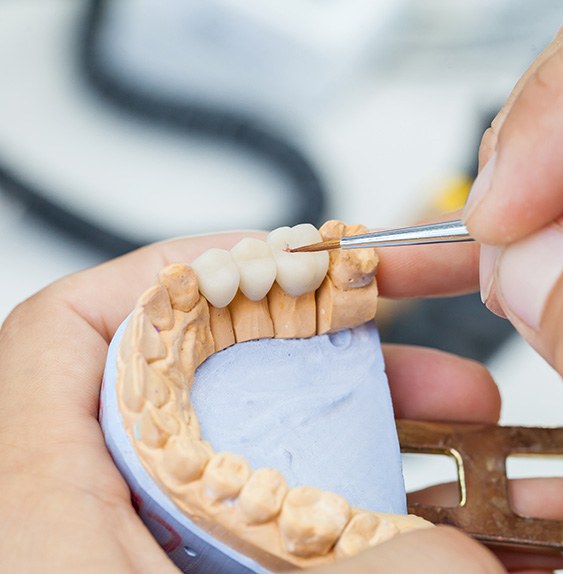
A dental bridge is a prosthetic series of teeth that are anchored in place by two abutment crowns. A bridge can replace between one and four consecutive teeth; however, it is most often used to replace just one or two. Dental bridges essentially look like a series of teeth that are stuck together, much like they naturally appear in your arch. If you are missing between one and four consecutive teeth surrounded by healthy anchor teeth, you may be an ideal candidate for a dental bridge.
Types of Dental Bridges
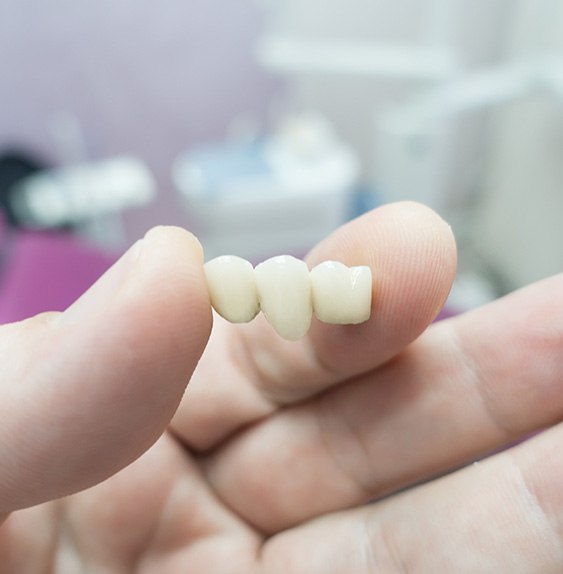
There are two types of dental bridges available: traditional and implant bridges. Each has its own pros and cons, but your dentist can help you decide which option is best for your individual smile. Here’s a closer look at each.
Traditional Dental Bridges
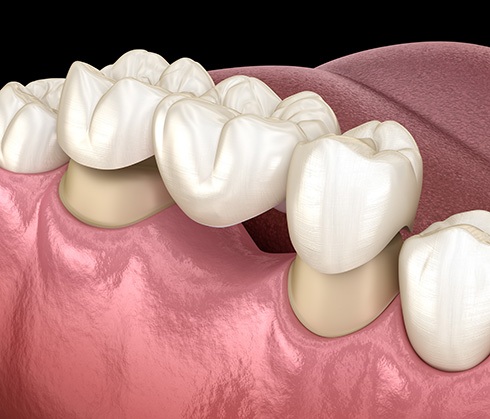
A traditional dental bridge anchors to your arch by two abutment crowns that are cemented onto your healthy teeth. That’s why in order to be a good candidate for this treatment, you’ll need to have two teeth that are strong enough to support your bridge surrounding the gap. Benefits of this type of bridge are that they are relatively quick to prepare. Most can be attached in just two appointments, and because your prosthetic is made of durable materials, you can expect it to last for up to ten years. It is also more affordable than other options, making it a better choice for patients on a tight budget.
Implant Bridges
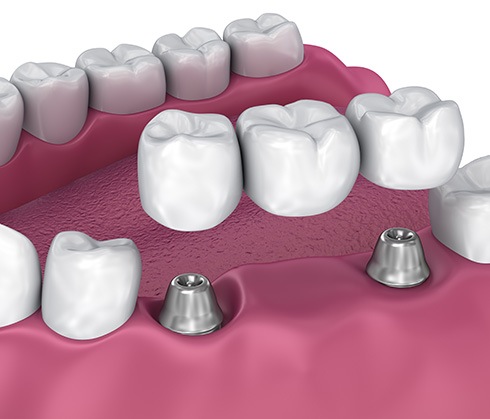
Implant bridges are a more permanent solution to missing teeth. Instead of relying on the presence of two healthy abutment teeth, your implant bridge will stay permanently in place with the help of dental implants that are attached to your jawbone. This treatment does take longer to complete, as you must first heal from the implant surgery before getting your bridge, however because it is permanent you won’t need to replace your implant bridge every ten years like you would a traditional bridge.
The Benefits of Getting a Dental Bridge

When you’re missing permanent teeth, it can cause a variety of problems beyond just appearances. Your teeth can shift out of place, causing bite issues and misalignment. Gaps in your smile can also decrease your self-esteem and confidence, potentially holding you back personally and professionally. You may also suffer difficulties eating and speaking clearly and even experience an increase in oral health problems that could cost you even more of your natural smile.
With a dental bridge, you can “bridge” the gaps in your smile, allowing you to once again eat, speak, and smile with confidence, all the while safeguarding your healthy teeth from a variety of oral health conditions like shifting and bite changes. To learn more about this treatment, please schedule a consultation with us today!
Dental Bridges FAQs
Can You Take a Dental Bridge Out?
No, you cannot remove a dental bridge yourself. They were designed to remain in place in your mouth for many years. Only your dentist can remove a dental bridge.
Some healthcare providers may refer to a partial denture as a “removable bridge,” but this is a misnomer. While partial dentures are similar to dental bridges, they can be removed by the patient at any time while true dental bridges cannot.
Is Getting a Dental Bridge Painful?
Before Dr. Young prepares your teeth to support a dental bridge, he will numb the teeth he’ll be working on. Usually this will only require a topical anesthetic. Following the preparation and placement of your bridge, your underlying teeth will likely feel sensitive over the next few days. This can be treated with over-the-counter pain reliever, but please give us a call if it does not, or if your pain worsens instead of improves.
If you are receiving a dental implant bridge, you will likely experience some soreness after your placement surgery, but you’ll be provided with aftercare instructions to minimize your pain prior to your procedure.
Is a Partial Denture the Same as a Bridge?
No. Although partial dentures can sometimes be referred to as “removable bridges,” they are not the same thing as a traditional fixed bridge.
Dental bridges are designed to stay in place for many years and can only be removed by your dentist, while partial dentures can be removed on your own at any time. Dental bridges can also only replace missing consecutive teeth, whereas partials can replace several at various places on your arch.
Dental bridges are anchored in place via crowns that are attached to two healthy abutment teeth, while partials rely on metal clips or clasps that secure behind your natural teeth.
Dr. Butler will review your replacement options with you at your consultation to determine which will work best with your smile, budget, and lifestyle.
How Many Teeth Can a Dental Bridge Replace?
Depending on your individual needs, a dental bridge can replace between one and four missing teeth in a row. However, in most cases they are ideal for only one or two. That’s because the longer your bridge extends, the less stable it becomes, especially if the natural teeth supporting the bridge aren’t strong and healthy. Thus, it can be risky for your bridge to replace more than two teeth.
A dental implant bridge can lower this risk, as dental implants secure to the jawbone, making them as strong and secure as real teeth, if not more so.